
Skills you’ll gain
Overview
Food allergies affect millions of people worldwide and can trigger severe, even life-threatening reactions if not properly managed. For those working in food service, hospitality, education, or healthcare, awareness of food allergies is not only a legal responsibility but also a crucial aspect of customer safety and care. This course provides learners with the essential knowledge to identify allergens, prevent cross-contact, and respond effectively to allergic reactions.
The training covers the difference between food allergies, intolerances, and sensitivities, highlighting the “major allergens” most commonly linked to serious reactions. Learners will understand how to communicate clearly with customers, read labels accurately, and apply safe food handling and storage practices. Special emphasis is placed on preventing cross-contamination and maintaining compliance with food safety laws and regulations.
Through real-world case studies and practical scenarios, participants will gain the confidence to handle allergy-related concerns responsibly and proactively. By the end of the program, learners will be equipped to create safer food environments, build customer trust, and reduce the risks associated with food allergies.
Learning Outcomes
By the end of this course, learners will be able to:
- • Distinguish between food allergies, intolerances, and sensitivities.
- • Identify common allergens and where they are found in food.
- • Apply safe food handling and storage practices to prevent cross-contact.
- • Communicate allergen information clearly and accurately.
- • Recognise the symptoms of allergic reactions, including anaphylaxis.
- • Respond effectively to allergy emergencies.
- • Support a culture of safety and inclusivity in food environments.
Description
This course introduces learners to the fundamentals of food allergy awareness, focusing on safety, prevention, and emergency response. It explains what food allergies are, identifies the most common allergens, and emphasizes the importance of accurate labeling and communication. Participants will learn safe food handling practices, procedures to prevent cross-contamination, and how to act swiftly in the event of an allergic reaction. Using case studies and practical examples, the course ensures learners can apply their knowledge confidently in real-world food service and care settings.
Who Is This Course For
This training is designed for food handlers, chefs, hospitality workers, catering staff, and educators responsible for serving or supervising food. It is also valuable for healthcare staff, childcare providers, and anyone involved in food preparation or service. Suitable for both new employees and experienced professionals, the course helps organizations meet compliance requirements while ensuring safer environments for individuals with food allergies.
Career Path
Completing this course supports careers in food service, hospitality, catering, and healthcare. Learners may pursue or strengthen roles such as Food Handler, Catering Supervisor, Kitchen Manager, or Hospitality Professional. It also provides a strong foundation for progression into food safety, compliance, or management roles, helping professionals demonstrate their commitment to safety and customer care.
Curriculum
 7 Sections
 6 lectures
 1h 4m
1h 4m
 Module 01: Understanding Food Allergies
Module 01: Understanding Food Allergies
-
00:10:00

Module 02: More Causes and Symptoms of Food Allergies
Module 02: More Causes and Symptoms of Food Allergies
-
00:10:00
Module 03: Allergen Facts and Legislation
Module 03: Allergen Facts and Legislation
-
00:10:00
Module 04: Practical Precautions and Consumer Protection
Module 04: Practical Precautions and Consumer Protection
-
00:12:00
Module 05: Managing Risks and Storing Food
Module 05: Managing Risks and Storing Food
-
00:11:00
Module 06: Allergy Awareness and Support
Module 06: Allergy Awareness and Support
-
00:11:00
Final Exam
Final Exam
-
 Final Exam – Food Allergy Awareness Training
Certificate of Completion
Awarded upon successful completion of the course.
Download Catalog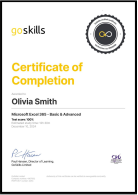
Instructor
TJ Walker
TJ Walker has been conducting media training workshops and seminars since 1984. Walker has trained Presidents of countries, Prime Ministers, Nobel Peace Prize winners, Super Bowl winners.
His book, "Secret to Foolproof Presentations" was a USA Today #1 Bestseller, as well as a Wall Street Journal.
Download Catalog
Accreditation & Partners



.svg)